Cultura Social Media 2018
“Comunicación, propaganda y trabajo digital”

The central role of online platforms and social media in our lives has redefined how we communicate, as well as how we access and consume information. We can express ideas and opinions, share moods, and organize activities quickly and on a massive scale within an ecosystem characterized by an abundance of content and an increasingly scarce attention span. The lifestyles and forms of communication visible across various digital spaces reflect the fact that we live in a constantly evolving digital culture.
At the same time, this digital culture exists within a context of democratic crisis and a process of mediatization that is redefining the exercise of authority and expanding the ways in which political expression and participation occur, thereby shaping public debate. The traditional intermediary role of the media is coming into tension with the role of algorithms and platforms that facilitate the creation, distribution, and consumption of information. Emotionality and authenticity are hallmarks of communication in today’s ecosystem, where the competition for the visibility of ideas and expressions is quantified and structured around the commercial logic of technology companies. Politics aligns with these processes, affecting not only the relationship between citizens and their representatives but also trust in institutions.
Through presentations by prominent international scholars, the *Cultura Social Media ’24* conference—organized by the School of Communications and Journalism at Adolfo Ibáñez University—examined the role that polarization and disinformation play in the future of digital culture.
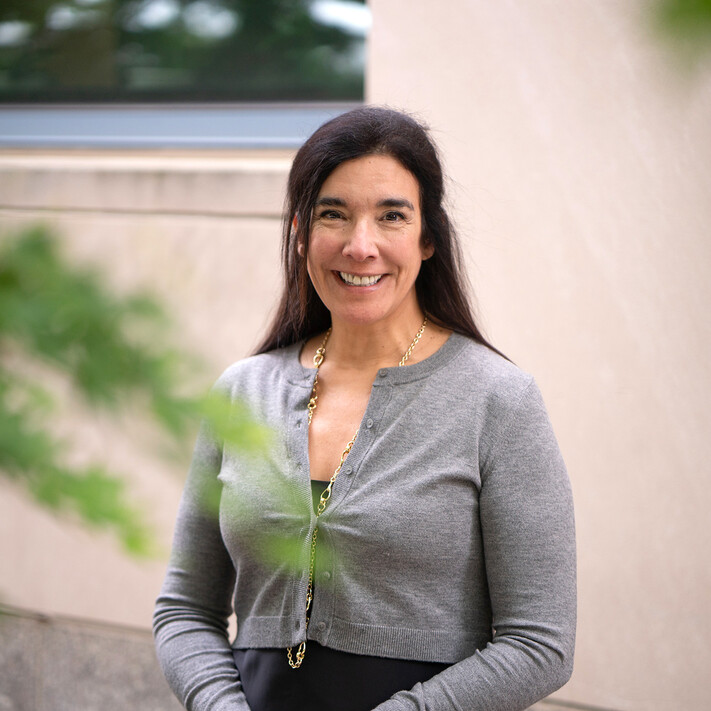
Dolores Albarracín
Annenberg School for Communication, University of Pennsylvania
Professor at the Annenberg School for Communication at the University of Pennsylvania. Her research explores the impact of communication and persuasion on human behavior and belief formation, with a focus on promoting positive social interactions. She has published nearly 200 articles and chapters in leading scientific journals and has significantly influenced national health communication policy in the United States. She served as Editor-in-Chief of Psychological Bulletin (2014–2020) and is the author of six books, including The Handbook of Attitudes (2018) and Action and Inaction in a Social World (2021).
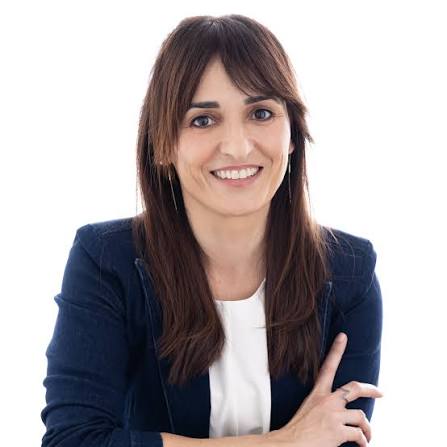
Sandra González-Bailón
Annenberg School for Communication, University of Pennsylvania
Professor of Communication at the Annenberg School for Communication at the University of Pennsylvania and Director of the Center for Information Networks and Democracy (CIND). She was previously a researcher at the Oxford Internet Institute (2008–2013). Her research agenda lies at the intersection of computational social science and political communication, focusing on how online social media and algorithmic curation shape information exposure—with implications for political engagement, mobilization dynamics, information diffusion, and news consumption. Her articles have appeared in journals such as PNAS, Nature, Science, Political Communication, The Journal of Communication, and Social Networks, among others. She is the author of Decoding the Social World* (MIT Press, 2017) and co-editor of The Oxford Handbook of Networked Communication (OUP, 2020).

Carlos Scolari
Universidad Pompeu Fabra (Barcelona)
Professor of Theory and Analysis of Interactive Digital Communication at UPF. His research focuses on the evolution of the media ecosystem, interfaces, and platforms. He has served as Principal Investigator for the projects Platcom (2020–23), Transmedia Literacy (EU, Horizon 2020, 2015–18), and Transalfabetismos (MINECO, 2015–17). His notable publications include Ecología de los Medios (2015), Media Evolution (with Fernando Rapa, 2019), Cultura Snack (2020), and Sobre la evolución de los medios (2024).
“Comunicación, propaganda y trabajo digital”
(Español) Trabajo creativo y desafíos de la inteligencia artificial en las industrias culturales
(Español) Cultura de los algoritmos en un ambiente mediático cambiante
(Español) Tecnologías emergentes | Futuros inciertos