Who we are
About the lab
The Laboratory for Digital Culture and Society (LCSD) is a research initiative of the School of Communications and Journalism at Universidad Adolfo Ibáñez (UAI, Chile). It emerges from academic work developed since 2018 to understand how digital platforms and artificial intelligence are transforming social, cultural and economic life.
Its relevance is framed within the profound processes of transformation we are experiencing, driven by the growing prominence of digital platforms and, increasingly, of artificial intelligence in social and economic life.
Our objective is to analyse the new sociocultural formations mediated by digital platforms and AI systems. We are particularly interested in transformations in creative work, the cultures and economies that emerge around platform labour, as well as the challenges faced by workers in the face of automation, algorithmic control and digital dependency.

This initiative seeks to contribute to the development of critical and academic thought around digital culture in Latin America, placing that knowledge at the service of the community by analysing in depth the new challenges that digitalisation poses to culture, the economy and work.
The laboratory aims to become a space of excellence in academic research in the region and formalises an approach grounded in the social sciences, particularly in communication and sociology as fields of study, in line with the broad vision of the School of Communications and Journalism at Universidad Adolfo Ibáñez, which recognises the central role of global and digital communications phenomena in contemporary social transformations.
team
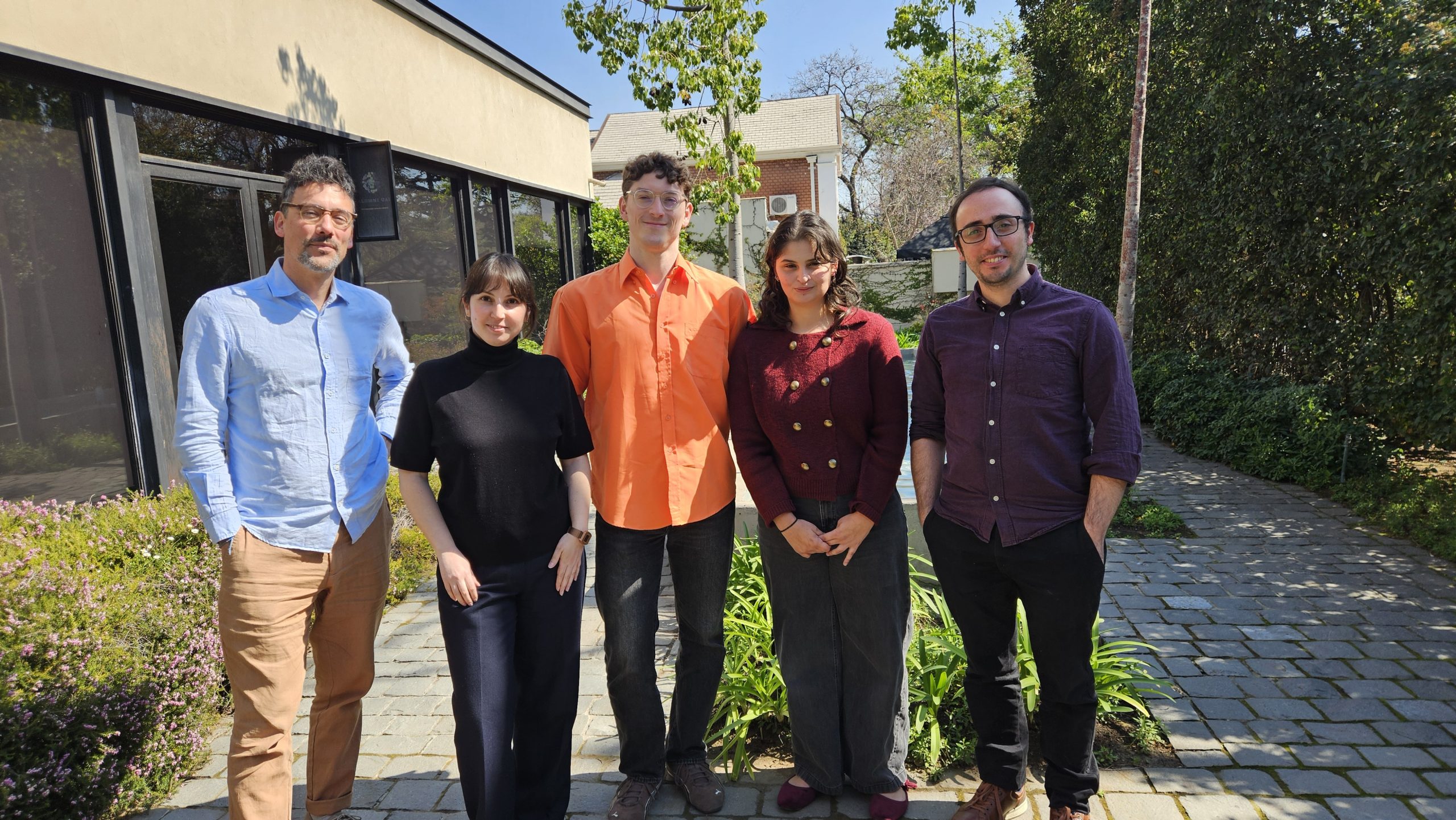
The LCSD brings together researchers with backgrounds in sociology, communication, anthropology and interdisciplinary studies. Our team combines international experience and knowledge of the Latin American context (see more in Team).
Research
The LCSD conducts excellence-driven research grounded in the social sciences, particularly in communication and sociology. Our work is organised around five overarching research lines:
Digital Life
We explore how digital technologies reshape everyday social interactions, the formation of social and collective bonds, and daily routines. Within this framework, we analyze the role of technological mediation in the construction of identities, affect, and experiences in digital environments.
Learn more
Content Creators
We investigate the ecosystem of content creators, influencers, TikTokers, YouTubers, and emerging figures in digital communication. We focus on their practices, monetization strategies, and relationships with their audiences and communities, as well as the impact of their narratives on the contemporary public sphere.
Learn more
Gig Economy
We examine the transformations in the world of work resulting from the emergence of digital platforms. We study working conditions, management algorithms, and the experiences of delivery workers, drivers, and e-commerce salespeople.
Learn more
Controversies
We analyze instances of public outcry, disputes, and scandals involving scientific and technical innovations, with a particular focus on controversies surrounding major technology companies. Our aim is to understand the ethical, political, and social tensions that arise regarding power, surveillance, and transparency in the context of platforms and artificial intelligence.
Learn more
Cultural and Creative Industries
We examine how musicians, artists, journalists, developers, and audiovisual professionals navigate the disruptions caused by platforms and generative AI, considering the new dynamics of production, distribution, and cultural consumption in the contemporary world.
Learn moreRead more about our lines of research
Discover how we transform technology into knowledge. Explore our five lines of research and learn about the projects defining the digital future from the Global South.
Learn moreINTERNATIONAL NETWORKS
In a world where digitalization permeates every sphere of social, cultural, and economic life, research into Digital Culture and Society cannot be conceived in isolation.
The Digital Culture and Society Laboratory recognizes that contemporary challenges—such as the digital divide, disinformation, generative artificial intelligence, the preservation of digital heritage, and new forms of online social interaction—are global phenomena requiring collaborative and comparative responses.
Nombre Centro o Institución
Tempus leo eu aenean sed diam urna tempor. Pulvinar vivamus fringilla lacus nec metus bibendum egestas. Iaculis massa nisl malesuada lacinia integer nunc.
Saber más
Nombre Centro o Institución
Tempus leo eu aenean sed diam urna tempor. Pulvinar vivamus fringilla lacus nec metus bibendum egestas. Iaculis massa nisl malesuada lacinia integer nunc.
Saber másTraining and community
The laboratory seeks to contribute to critical thinking about digital culture in Latin America.
We place the knowledge we generate at the service of the community, analyzing in depth the challenges that digitalization poses to culture, the economy, and work. We foster open, horizontal exchange with national and international participants and guests through intimate online discussions—distinct from the large-scale format of an annual conference.
Financing
Our work has been funded by organizations such as:
Agencia Nacional de Investigación y Desarrollo (ANID-Chile)
A Chilean public agency under the Ministry of Science that funds and promotes scientific research, technological development, and innovation.
Learn more
Ministerio de las Culturas, las Artes y el Patrimonio (Chile)
The Ministry of Cultures, Arts, and Heritage is the Chilean state agency responsible for promoting culture and art, as well as protecting national heritage.
Learn more
UNESCO
It is the UN body responsible for promoting world peace and sustainable development through international cooperation in education, science, and culture.
Learn more
International Development Research Center
Canadian state-owned corporation that funds scientific research in developing countries to reduce poverty and promote sustainable growth.
Learn more
WZB
The WZB (Berlin Social Science Center) is an independent German institute, recognized as the largest social science research center in Europe.
Learn more
Internet Society Foundation
It is an organization that funds global projects to expand internet access and promote digital inclusion.
Learn moreEthics and public commitment
Our research adheres to rigorous ethical standards, ensuring data protection and respect for privacy. We promote the open dissemination of results and, where appropriate, the use of participatory methodologies that involve the public in the research design.